Parasite (2019) Review and Breakdown
You know, when I first heard about Parasite (2019), I did not immediately feel excited to watch it. The title itself sounded strange and slightly uncomfortable. It wasn’t one of those blockbuster-sounding movie names that immediately draw you in. What started as a casual viewing experience slowly turned into something far more engaging. As the film progressed, I realized that I was completely drawn into the world Bong Joon-ho had created. The film began almost like a dark comedy but gradually unfolded into something much deeper and more disturbing. By the time the credits rolled, it left me thinking about society, class, and human desires in ways that very few films manage to do. For me, Parasite easily stands as a 9/10 film, not just because of its storytelling but because of how realistically it reflects the world we live in. Bong Joon-ho does something remarkable here: he captures complex emotions and social commentary within frames that feel simple on the surface but are layered with meaning underneath.
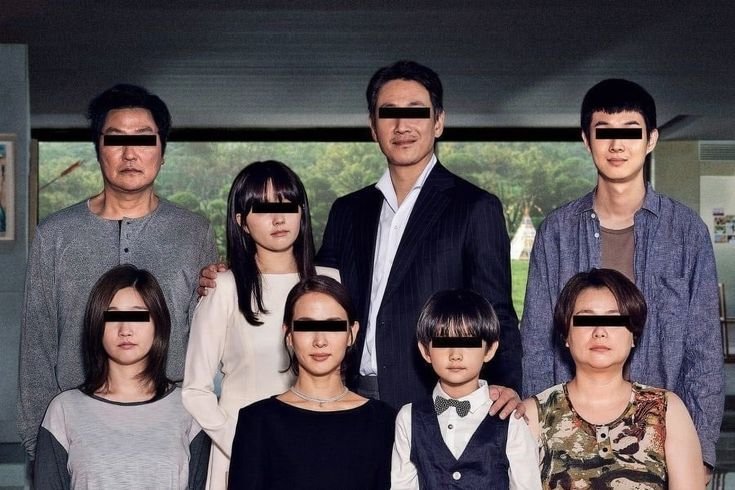
The film revolves around the Kim family — father Kim Ki-taek, mother Chung-sook, and their children Ki-woo and Ki-jung. They live in a cramped semi-basement apartment in a poor neighborhood of Seoul, struggling to survive with limited opportunities and resources. Their lives are defined by scarcity. They fold pizza boxes for money, rely on stolen Wi-Fi from nearby buildings, and constantly complain about the unfair advantages that wealthy people enjoy. Everything changes when Ki-woo receives an unexpected opportunity through a friend. The friend recommends him as an English tutor for the daughter of the wealthy Park family. What initially seems like a simple job slowly becomes the gateway through which the entire Kim family begins to infiltrate the Park household. Through a series of clever manipulations and carefully planned lies, each member of the Kim family secures a position within the rich household — the son as a tutor, the daughter as an art therapist, the father as a driver, and the mother as a housekeeper. The way they pretend not to know each other while working for the same family becomes both humorous and unsettling. The comedy of their scheme is entertaining at first, but beneath that humor lies a darker exploration of human ambition and desperation.
WATCH THE OFFICIAL TRAILER OF ‘PARASITE’
Social Inequality and Human Desire
One of the most powerful aspects of Parasite is how it exposes the deep divide between social classes without turning the story into a straightforward moral lesson. The Kim family’s infiltration of the Park household is not portrayed simply as criminal behavior or deception. Instead, it reflects the desperation that can arise when people feel trapped within an unequal system. The Kims are not evil characters; they are survivors trying to escape the limitations of poverty. At the same time, the Park family is not portrayed as villains either. They are polite, well-mannered, and even generous at times. Yet they remain completely disconnected from the struggles of the working class. Their wealth creates a bubble that shields them from the harsh realities faced by people like the Kims.
One moment that initially felt unrealistic to me was how easily the Park family trusted the strangers entering their household. For example, Kim Ki-taek manages to convince Mrs. Park that the original housekeeper is hiding a serious illness. The claim is absurd, yet Mrs. Park believes it almost instantly. At first, it felt slightly exaggerated. But when I thought about it more carefully, it actually made sense within the context of the story. The Park family has lived a life of privilege where they rarely encounter deception directly. Their wealth protects them from the darker aspects of society, making them more vulnerable to manipulation. In contrast, the Kim family has spent their entire lives navigating survival within harsh conditions. They understand how people behave under pressure and know how to exploit that knowledge. This contrast between naivety and experience becomes a key theme throughout the film.

The Spaces That Define the Characters
Another brilliant element of Parasite is how Bong Joon-ho uses physical spaces to represent social hierarchy. At the beginning of the film, the Kim family’s semi-basement apartment is shown in detail. The camera frequently frames the small windows that barely sit above street level. Through these windows, we see drunk men urinating outside and pest control fumigation drifting into the apartment. The space feels cramped, dirty, and suffocating. Even the bathroom is positioned awkwardly above the living area, emphasizing the uncomfortable conditions in which the family lives. These details are not simply aesthetic choices; they communicate the harsh reality of poverty without requiring explicit dialogue.
In contrast, the Park family’s home is presented as the complete opposite. Designed like something from an architectural magazine, the house is spacious, minimalistic, and filled with natural light. Large glass windows overlook a perfectly maintained garden. The house feels calm, organized, and luxurious. The visual difference between the two homes perfectly represents the economic divide between the families. One lives underground, almost literally beneath society, while the other lives high above in a modern architectural masterpiece.
The contrast becomes even more powerful during the film’s famous flooding sequence. After heavy rain, the Kim family’s neighborhood is completely submerged in dirty floodwater. Their apartment becomes unlivable, filled with sewage and destroyed belongings. Meanwhile, the Park family barely notices the storm. For them, the rain simply provides a pleasant atmosphere for camping plans in their backyard. This moment perfectly captures how the same event can affect different social classes in completely opposite ways.
Metaphors, Symbols and the Film’s Hidden Details
Bong Joon-ho fills Parasite with subtle metaphors that deepen the film’s message about class inequality. One of the most discussed symbols in the film is the recurring idea of “smell.” The wealthy Park family frequently comments on a strange smell associated with the Kim family, particularly the father. They describe it as something unpleasant yet difficult to identify. This smell becomes a symbolic marker of class difference. It represents the invisible boundaries that separate the rich from the poor. Even when the Kims successfully infiltrate the Park household, they cannot completely escape the social identity shaped by their environment.
Another powerful symbol in the film is the staircase. Throughout the movie, characters are constantly moving up or down stairs. The Kim family climbs upward when entering the Park house, symbolizing their temporary rise into wealth. Later, they descend into darker and hidden spaces beneath the house, revealing secrets that mirror their own situation. These vertical movements subtly reinforce the theme of social hierarchy without needing explicit explanation.
The film’s title itself carries an important metaphor. The Kim family can be seen as parasites feeding off the wealth of the Park family, infiltrating their home and benefiting from their resources. However, Bong Joon-ho complicates this interpretation by suggesting that the wealthy system itself may also function like a parasite, feeding off the labor and struggles of the lower classes. This ambiguity is what makes the film so fascinating. It refuses to present a simple answer about who the real parasite is.
As the story moves toward its shocking final act, the tone shifts dramatically from dark comedy to tragic violence. The events that unfold lead to the destruction of multiple lives and families, turning what began as a clever scheme into a devastating outcome. Yet even in this tragedy, the film maintains its emotional complexity. None of the characters feel entirely responsible for the chaos that erupts. Instead, they appear as victims of a larger social structure built on inequality, ambition, and the endless pursuit of wealth. Bong Joon-ho crafts this narrative with such precision that every detail — from the architecture of the houses to the smallest gestures between characters — contributes to a powerful cinematic experience that continues to resonate long after the film ends.