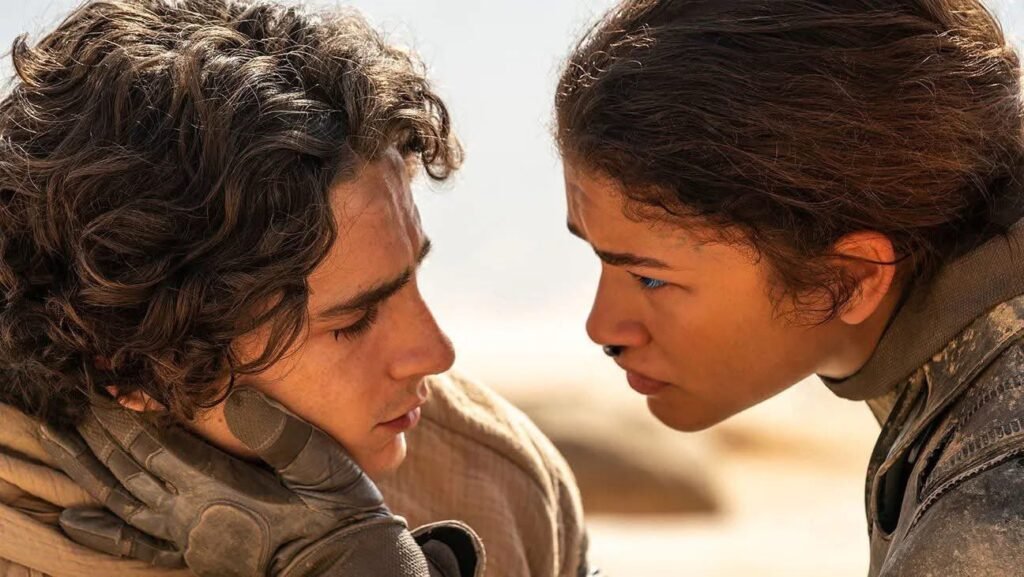
 Denis Villeneuve’s Dune 3 –
films have become one of the most ambitious science-fiction projects in modern Hollywood. When the first film released in 2021, it surprised audiences with its scale, world-building and commitment to adapting Frank Herbert’s legendary novel with remarkable fidelity. Instead of rushing through the story, Villeneuve chose to split the narrative across multiple films, allowing the audience to fully immerse themselves in the political and spiritual conflicts of the Dune universe. With Dune: Part Two continuing the story of Paul Atreides and the Fremen rebellion on the desert planet Arrakis, discussions about the next chapter have already begun dominating film communities online. Although the studio has not officially confirmed every detail yet, Villeneuve has repeatedly suggested that the story could continue with a third film based on Herbert’s novel Dune Messiah. Because of the success of the first two films and the growing popularity of the franchise, many fans believe that a third installment is not only likely but also necessary to complete Paul Atreides’ narrative arc.
The Evolution of Paul Atreides
One of the most fascinating aspects of the Dune saga is the transformation of Paul Atreides from a young noble heir into a powerful messianic figure. Throughout the first two films, audiences watch Paul struggle with the immense expectations placed upon him by prophecy, politics and destiny. Raised as the son of Duke Leto Atreides, Paul initially appears as a reluctant participant in the dangerous power struggles of the galaxy. However, the destruction of House Atreides and the betrayal that follows push him into a position where survival depends on embracing the identity that others believe he was born to fulfill. As he integrates himself into the Fremen culture of Arrakis, Paul begins to realize that the myth surrounding him may be both a weapon and a burden.
If Villeneuve continues the story with a third film, the narrative would likely shift from Paul’s rise to power toward the consequences of that power. The novel Dune Messiah explores a darker phase of Paul’s journey, showing how the religious and political movements created in his name begin to spiral beyond his control. Instead of celebrating his victory, the story examines the ethical dilemmas that arise when a single figure becomes the center of an interstellar belief system. This shift in tone would make the third film very different from the earlier installments, focusing less on warfare and more on the psychological and philosophical implications of leadership. For audiences who appreciate complex storytelling, this evolution could provide one of the most compelling arcs in modern science-fiction cinema.
WATCH ‘DUNE’ OFFICIAL TRAILER :
A Different Kind of Science Fiction Franchise
Another reason Dune Part Three continues to generate excitement is the way the franchise has positioned itself within the science-fiction genre. Many large Hollywood franchises rely on constant action sequences and interconnected universes to maintain audience attention. Villeneuve’s Dune, however, takes a different approach. The films are built around atmosphere, political intrigue and the slow development of characters whose choices shape the fate of entire civilizations. This deliberate pacing allows viewers to absorb the details of the universe, from the cultural traditions of the Fremen to the manipulative strategies of powerful organizations such as the Bene Gesserit and the Spacing Guild.
Visually, the Dune films have also established a distinctive identity. Cinematographer Greig Fraser’s use of natural light and vast desert landscapes gives Arrakis a sense of realism that contrasts sharply with the glossy aesthetic of many science-fiction movies. Hans Zimmer’s music further reinforces the epic atmosphere, combining experimental sounds with powerful orchestral elements to create a score that feels both alien and emotionally resonant. If the third film continues this creative direction, it could further solidify the franchise as one of the most artistically ambitious science-fiction series ever produced.
Another major factor contributing to the anticipation is the ensemble cast that Villeneuve has assembled for the franchise. Timothée Chalamet’s portrayal of Paul Atreides has been widely praised for capturing the character’s internal conflict and gradual transformation into a leader. Surrounding him is a cast that includes actors such as Zendaya, Rebecca Ferguson, Javier Bardem and Florence Pugh, each bringing depth to their respective roles. The interactions between these characters form the emotional backbone of the story, ensuring that the political struggles of the galaxy remain grounded in personal relationships.
The popularity of the Dune films has also reignited interest in Frank Herbert’s original novels, introducing a new generation of readers to the complex themes that define the series. Concepts such as ecological responsibility, religious manipulation and the dangers of charismatic leadership remain highly relevant today, which is part of the reason the story continues to resonate with audiences decades after it was first published. Villeneuve’s adaptation respects these ideas while translating them into a cinematic language that modern viewers can appreciate.
If Dune Part Three moves forward as expected, it may represent the culmination of Villeneuve’s long-term vision for the franchise. The director has often described the project as a deeply personal endeavor, one that he dreamed of bringing to the screen since childhood. Completing the trilogy would allow him to explore the full trajectory of Paul Atreides’ story, from the tragedy that forces him into exile to the complicated legacy he leaves behind. For fans who have followed the journey from the beginning, the possibility of seeing this narrative reach its conclusion on the big screen is an exciting prospect.

The Future of the Dune Universe Beyond the Trilogy
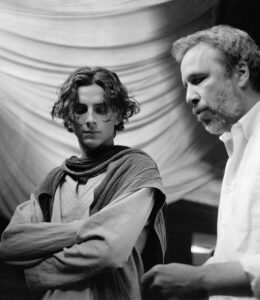
Another reason discussions about Dune Part Three continue to grow online is the possibility that the film could open the door to an even larger cinematic universe based on Frank Herbert’s novels. While Denis Villeneuve has repeatedly emphasized that his primary goal is to complete Paul Atreides’ story with a third film inspired by Dune Messiah, the literary universe created by Herbert extends far beyond that narrative. The original book series includes multiple sequels that explore the long-term consequences of Paul’s rule and the transformation of humanity across centuries. Because of this expansive source material, many fans believe that the success of the first three films could eventually lead to additional projects set within the same universe, whether through direct sequels, spin-off films or streaming series. In fact, the television series Dune: Prophecy has already begun expanding the world of the Bene Gesserit, demonstrating that studios are interested in exploring different corners of the Dune mythology.
However, Villeneuve’s approach to the franchise has always prioritized storytelling discipline over endless expansion. Rather than immediately launching multiple interconnected projects, the director has focused on creating films that stand as carefully crafted cinematic experiences. If Dune Part Three successfully adapts the themes of Dune Messiah, it could serve as a powerful conclusion to Paul Atreides’ arc while still leaving room for other stories set within the same universe. This balance between closure and possibility is part of what makes the future of the Dune franchise so intriguing. Audiences who have followed the journey from the first film are eager to see how the next chapter explores the consequences of Paul’s rise to power, while longtime readers of Herbert’s novels are curious to discover how Villeneuve will interpret the philosophical depth of the source material on screen. As anticipation continues to build, Dune Part Three stands not only as the next step in an epic science-fiction saga but also as a film that could redefine how large-scale literary adaptations are approached in modern cinema.