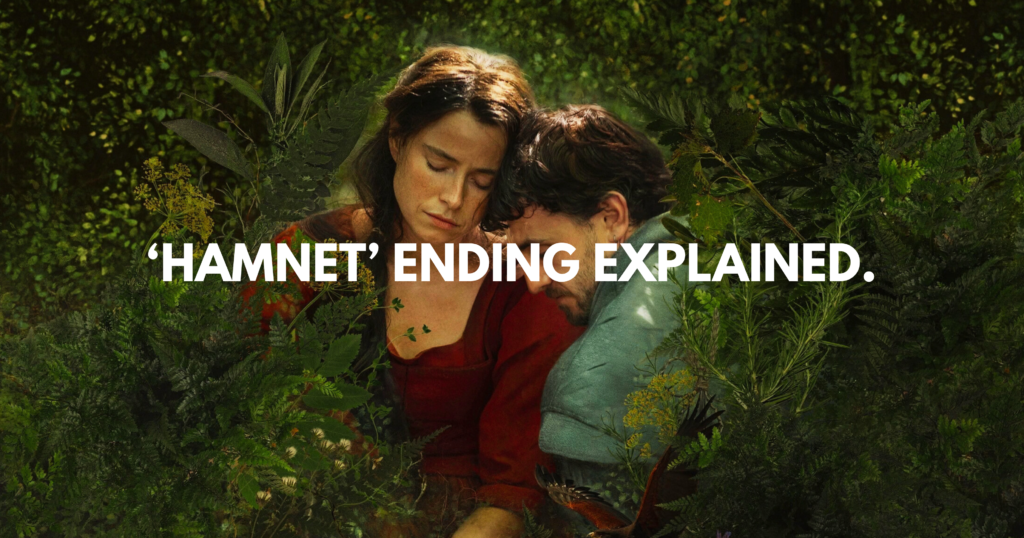

Hamnet Ending Explained: The Meaning Behind the Tragic Story
Some films leave you entertained for a few hours, but others stay with you long after the credits roll. Hamnet belongs to the second category. The film, directed by Chloé Zhao, is not simply a historical drama but an emotional exploration of grief, love and the hidden story behind one of the greatest playwrights in history. By the time the film reaches its final moments, the emotional weight becomes almost overwhelming, leaving audiences deeply moved by the tragic journey of the characters.
The story focuses on Agnes, the wife of William Shakespeare, and the devastating loss of their son Hamnet during a plague outbreak. While Shakespeare’s literary achievements are celebrated around the world, the emotional tragedy that may have influenced his writing is rarely explored. The film’s ending attempts to connect this personal grief with the birth of one of Shakespeare’s most famous works.
The Tragic Death of Hamnet
The emotional core of the film revolves around the death of Hamnet, the young son of William Shakespeare and Agnes. During a plague outbreak, the illness spreads rapidly through the town, eventually reaching the Shakespeare household. The film portrays this moment with devastating realism, showing how quickly life can change in the face of uncontrollable tragedy.
The death of Hamnet does not simply represent the loss of a child but the collapse of an entire emotional world for the family. Agnes, who shares an especially deep bond with her son, is shattered by the loss. Her grief becomes the emotional center of the story, and the film carefully shows how the absence of Hamnet slowly changes every aspect of her life.
Agnes and the Weight of Grief
One of the most powerful aspects of the film’s ending is its portrayal of Agnes and her overwhelming grief. Jessie Buckley delivers an extraordinary performance, capturing the quiet devastation of a mother who has lost her child. The film avoids dramatic speeches or exaggerated emotions and instead focuses on small moments of silence and reflection.
Agnes wanders through spaces that once held memories of her son, and every object becomes a reminder of what has been lost. The stillness of these scenes allows the audience to feel the depth of her sorrow. Her grief is not portrayed as something that can easily heal but as a permanent scar that continues to shape her life.
William Shakespeare’s Response to Loss
While Agnes expresses her grief through silence and emotional isolation, William Shakespeare processes the tragedy differently. Paul Mescal portrays Shakespeare as a man who struggles to confront his emotions directly. Instead of expressing his pain openly, he channels his grief into his work as a playwright.
The film suggests that Shakespeare’s creative process becomes a way for him to confront the tragedy indirectly. Writing becomes his method of understanding loss and transforming personal pain into something that can be shared with others. This creative transformation becomes one of the central themes of the film’s final act.
The Meaning Behind the Play Hamlet
One of the most powerful ideas presented in the ending is the connection between Hamnet’s death and Shakespeare’s famous play Hamlet. Historically, many scholars have speculated that the death of Shakespeare’s son may have influenced the creation of the tragic story. The film uses this idea to build an emotional bridge between real life and art.
The play Hamlet explores themes of grief, loss and the search for meaning in the face of tragedy. By suggesting that Shakespeare’s personal experience influenced his writing, the film presents the idea that art can emerge from pain. In this interpretation, the play becomes a way for Shakespeare to process the loss of his son while also immortalizing his memory.
How the Ending Connects Grief and Art
The final moments of Hamnet reveal how grief can transform into something meaningful through artistic expression. Instead of presenting Shakespeare as a distant historical figure, the film shows him as a father struggling to understand an unimaginable loss. The act of creating theatre becomes a way for him to give shape to emotions that cannot easily be spoken.
The theatre scenes near the end of the film highlight this transformation. The audience within the film watches a performance that reflects the emotional turmoil of the characters, while the real audience watching the movie begins to understand the deeper connection between Shakespeare’s life and his work. This moment suggests that art can serve as a bridge between personal tragedy and universal human experience.
Why the Ending Is So Emotionally Powerful
The emotional power of the ending comes from its quiet honesty. Instead of providing easy answers or dramatic resolutions, the film accepts that grief is something that never completely disappears. The characters must learn to live with the memory of their loss rather than overcome it.
The music, cinematography and performances all contribute to the emotional intensity of the final scenes. The haunting score adds a layer of sadness that lingers long after the film ends. Combined with the restrained performances of the actors, the ending becomes an unforgettable moment that resonates deeply with audiences.
The Historical Inspiration Behind the Story
Another reason the film’s ending feels so powerful is its connection to real history. Hamnet Shakespeare did indeed exist, and he died at the age of eleven in 1596. While historians cannot say with certainty how deeply this tragedy affected Shakespeare’s writing, the possibility creates a fascinating emotional context for his later works.
By focusing on Agnes and her experience of grief, the film also highlights the often overlooked role of women in historical narratives. Agnes is portrayed not only as a grieving mother but as a woman whose emotional world shaped the life of one of the greatest writers in history.
The ending of Hamnet
It is devastating because it transforms a historical footnote into a deeply human story. Through the performances of Jessie Buckley and Paul Mescal, the film explores how grief can reshape lives and inspire artistic creation. Instead of offering a traditional resolution, the film allows the audience to sit with the pain of loss and reflect on the ways people try to give meaning to tragedy.
By connecting the death of Hamnet with the creation of Hamlet, the film suggests that some of the most powerful works of art are born from the deepest moments of human sorrow. The result is a story that continues to linger in the mind long after the final scene fades, reminding us that behind every great work of art there may be a hidden story of love, loss and memory.