 A Film Carried by Performances
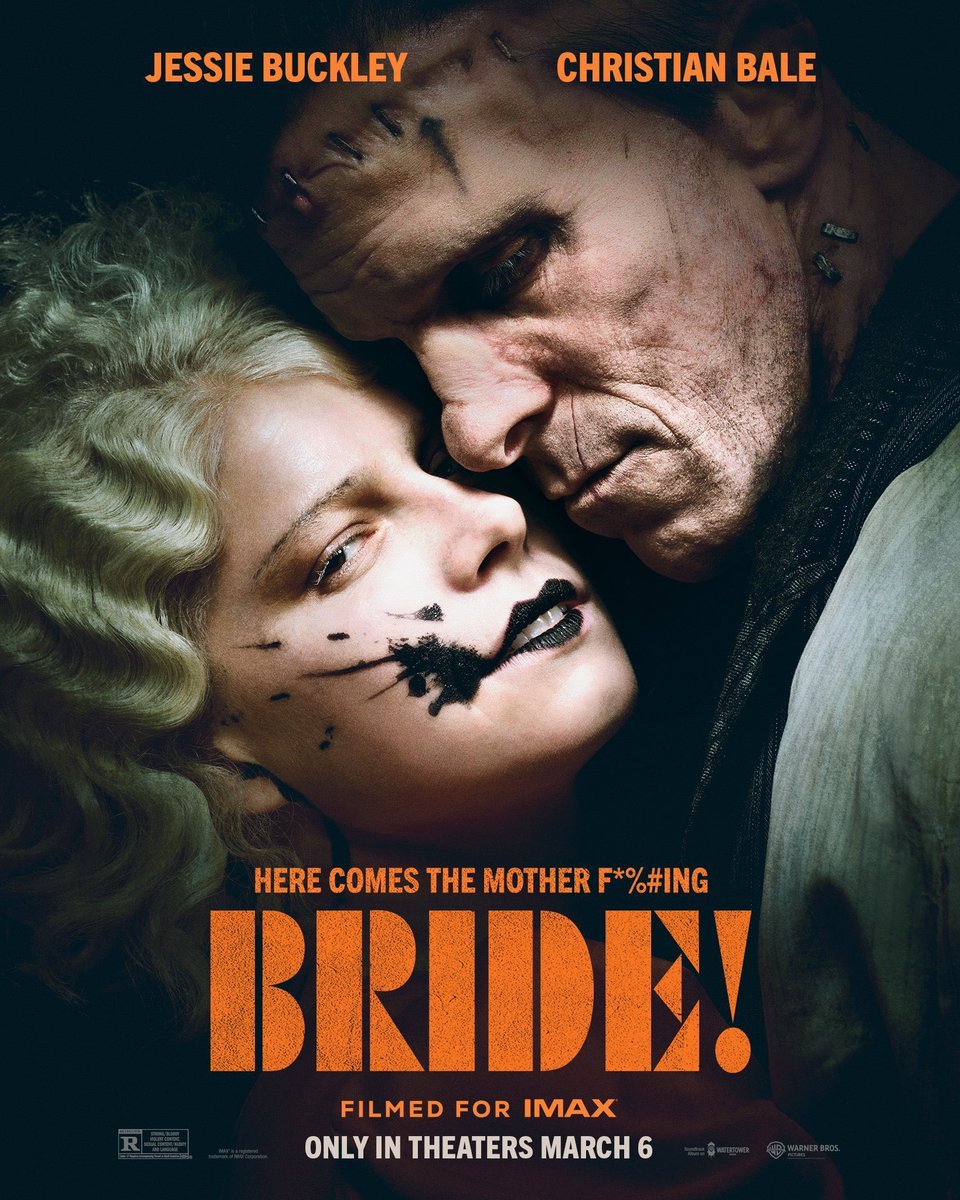
The Bride is one of those films where you walk out thinking about the performances more than the film itself. It’s not because the film lacks ambition — in fact, it’s quite the opposite. There’s clearly a strong artistic vision behind it. But what ultimately stays with you are the performances, particularly from Christian Bale and Jessie Buckley, who elevate the material to a level it doesn’t always deserve.
Christian Bale once again proves why he’s one of the most committed actors working today. There’s a raw intensity to his performance that feels completely immersive. Every movement, every expression, every moment of silence carries weight. He doesn’t just play the character — he inhabits it. Jessie Buckley matches that energy with a performance that is equally compelling, bringing both vulnerability and unpredictability to her role. Together, they create a dynamic that feels alive, even when the writing doesn’t fully support it.
In many ways, you could study this film purely for their acting. It’s the kind of performance-driven cinema that reminds you how powerful great acting can be. Even in scenes where the narrative feels thin, their presence keeps you engaged. They fill in the emotional gaps that the script leaves behind, making moments feel deeper than they actually are on paper.
What makes Bale’s performance especially interesting is the restraint he brings to the role. Rather than leaning into exaggerated gothic melodrama, he keeps the character grounded in emotional realism. There’s a sadness behind his eyes throughout the film, a sense of emotional exhaustion that quietly defines his presence. It gives the character depth even when the screenplay doesn’t provide enough psychological exploration.
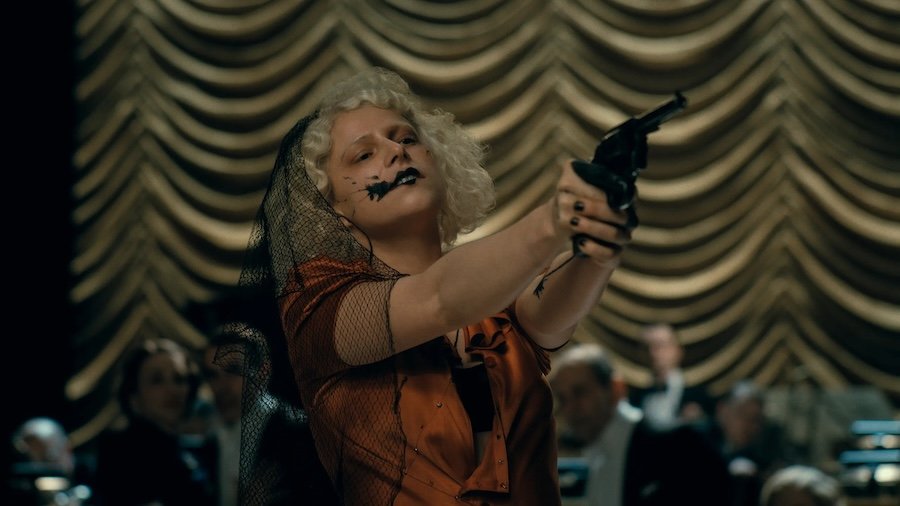
Jessie Buckley, on the other hand, brings unpredictability. Her performance constantly shifts between innocence, fear, anger, and curiosity, creating a character that feels unstable in the most fascinating way. She becomes the emotional center of the film, often communicating more through expression and body language than dialogue. It’s the kind of performance that makes you wish the screenplay trusted her character more deeply.
And honestly, that’s what becomes frustrating about The Bride. The actors are clearly operating at an extremely high level, but the film surrounding them doesn’t always rise to meet them.
Technical Brilliance — A Visually Perfect Gothic World
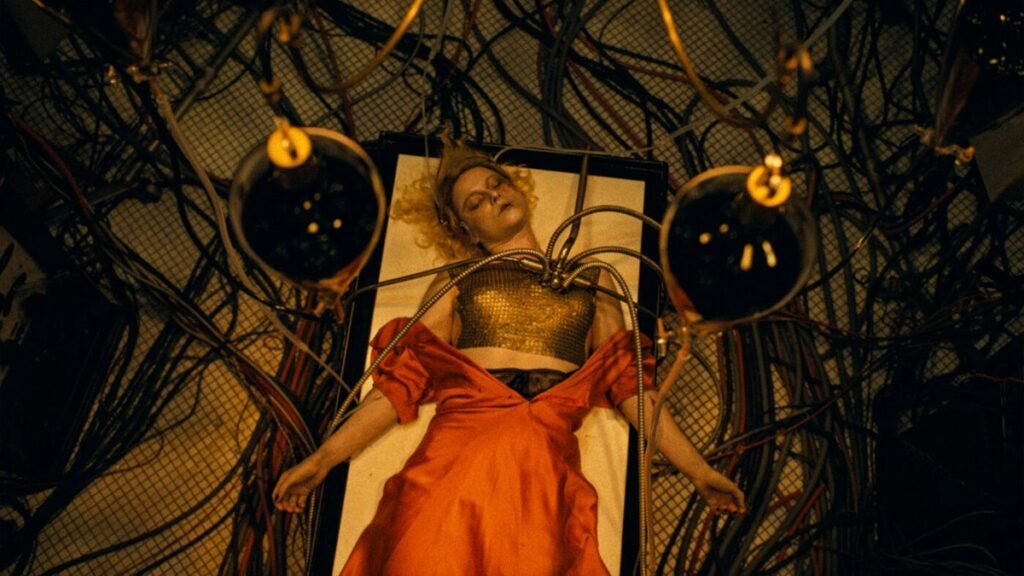
Technically, The Bride is almost flawless. The film understands its aesthetic and commits to it fully. From the very first frame, it establishes a visual language that is rich, atmospheric, and deeply rooted in gothic storytelling.
The costume design is exceptional. Every outfit feels intentional, reflecting not just the time period but also the emotional state of the characters. There’s a tactile quality to the costumes that makes the world feel real, lived-in, and textured. It’s not just about looking good — it’s about building a believable universe.
Lighting plays a crucial role in shaping the film’s tone. Shadows dominate the frame, creating a sense of mystery and unease. The contrast between light and darkness is used effectively, often highlighting the emotional distance between characters. This approach adds depth to the visuals, making each frame feel carefully composed.
The cinematography further enhances this experience. The framing is precise, often placing characters in positions that reflect their internal struggles. Wide shots emphasize isolation, while close-ups capture subtle emotional shifts. There’s a clear understanding of how visual storytelling can complement narrative themes.
Visually, the film is doing everything right. It creates a world that feels immersive and consistent, drawing you into its gothic atmosphere.
The production design deserves special mention as well. The environments feel cold, decayed, and emotionally suffocating in a way that perfectly fits the story. Large empty hallways, candle-lit interiors, rain-soaked exteriors — every location feels designed to reinforce emotional loneliness. The world itself almost becomes an extension of the characters’ psychology.
What’s impressive is how controlled the visual style feels. Modern gothic films sometimes overuse darkness and stylization to the point where the visuals lose clarity. The Bride avoids that mistake. Despite its heavy atmosphere, the imagery remains elegant and readable. The film understands balance.
The sound design also quietly strengthens the atmosphere. Small environmental sounds — footsteps echoing through empty rooms, distant thunder, the crackling of candles — create an unsettling silence that constantly lingers beneath conversations. The film rarely relies on loud horror cues, choosing instead to create discomfort through atmosphere.
That subtlety is one of the film’s strongest technical achievements.
Where the Film Falls Apart : The Writing
Despite its strengths, The Bride struggles where it matters most — the writing.
The concept itself is incredibly rich. The Bride of Frankenstein is one of the most iconic figures in gothic literature and cinema, carrying themes of identity, creation, loneliness, and existential purpose. There’s so much potential to explore something deeply philosophical and emotionally complex.
But the film never fully taps into that potential.
Instead of diving into the darker, more unsettling aspects of the story, the narrative feels surprisingly surface-level. The emotional beats are present, but they lack the depth needed to truly resonate. It’s as if the film sets up powerful ideas but doesn’t follow through with them.
One of the most noticeable issues is how the relationship is portrayed. Rather than building a layered, psychologically complex connection, it sometimes feels too straightforward. The idea of Frankenstein falling in love with his creation — something that could have been deeply disturbing and thought-provoking — is handled in a way that feels almost simplistic.
This is where the film starts to feel undercooked.
You can sense what it’s trying to do, but it never fully commits to it. The themes remain at a distance, never quite reaching the level of intensity or depth they deserve.
The dialogue also contributes to this issue. While there are occasional moments of strong writing, many conversations feel strangely restrained. Characters discuss emotions without fully revealing them. Important thematic ideas are hinted at rather than explored. The screenplay often feels afraid of becoming too uncomfortable or psychologically dark.
And for a gothic tragedy, that hesitation becomes a problem.
Because gothic storytelling works best when it embraces emotional extremity. These stories are supposed to feel obsessive, unsettling, tragic, and psychologically consuming. The Bride occasionally approaches those emotions but rarely dives completely into them.
That lack of commitment creates emotional distance between the audience and the narrative.
Missed Opportunities in Tone and Theme
What makes this even more frustrating is how close the film gets to greatness.
There are moments where you can see glimpses of what it could have been — scenes that hint at a darker, more philosophical approach. But these moments are not sustained. The film often pulls back just when it should be leaning in.
A story like this demands a certain tone — something unsettling, introspective, and emotionally heavy. It needs to explore the uncomfortable aspects of creation, identity, and human connection. It needs to challenge the audience.
Instead, The Bride plays it relatively safe.
It doesn’t fully embrace the horror, nor does it fully commit to the emotional complexity. This middle ground is where the film loses its impact. It’s visually bold but narratively cautious, and that imbalance becomes more apparent as the film progresses.
For a concept rooted in gothic tragedy, the lack of thematic depth is its biggest weakness.
The film raises fascinating questions:
What defines humanity?
Can something artificially created possess emotional authenticity?
Is love possible without identity?
What responsibility does a creator hold toward their creation?
But these ideas remain mostly in the background instead of becoming the emotional core of the story.
That’s what makes the experience feel frustrating rather than disappointing. Because the potential is visible in almost every scene.
 Comparison to Modern Gothic Cinema
Watching The Bride, it’s hard not to compare it to other modern takes on gothic storytelling, particularly films by directors like Robert Eggers.
Eggers’ work is known for its commitment to atmosphere, psychological depth, and historical authenticity. His approach to storytelling is unapologetically immersive, often diving deep into the darker aspects of human nature.
In comparison, The Bride feels restrained.
It has the visual style, the performances, and the foundation to reach that level, but it doesn’t push far enough. It stops just short of becoming something truly memorable.
For viewers who appreciate deeply atmospheric and philosophical cinema, this might feel like a missed opportunity.
There’s also a noticeable difference in emotional risk-taking. Directors like Eggers fully trust discomfort. Their films allow silence, ambiguity, and psychological collapse to dominate scenes naturally. The Bride occasionally feels more concerned with accessibility than emotional honesty.
And while accessibility isn’t inherently bad, it weakens a story that clearly wants to be emotionally haunting.
Why It Still Works — In Parts
Despite its flaws, The Bride is not a bad film.
There’s enough here to appreciate. The performances alone make it worth watching. The technical execution is impressive. And the world it creates is visually captivating.
There are moments where everything aligns — where the performances, visuals, and tone come together to create something genuinely powerful. It’s in these moments that you see the film’s true potential.
But those moments are not consistent enough to carry the entire film.
Still, the atmosphere alone makes the experience memorable. Very few modern films commit this fully to gothic visual storytelling anymore. Even when the narrative struggles, the film’s aesthetic identity remains incredibly strong.
And honestly, in an era where many films feel visually generic, The Bride at least feels distinctive.
A Film That Feels Like It Held Back
More than anything, The Bride feels like a film that held back. It had the opportunity to be darker, more unsettling, more philosophical — and it chose not to go all the way. Whether that was a creative decision or a limitation in execution, the result is a film that feels incomplete. You’re left thinking about what it could have been rather than what it is. And that’s both its strength and its weakness. Because while it may not fully satisfy, it still lingers in your mind — not as a great film, but as a fascinating one.
That lingering feeling is important. Truly forgettable films disappear instantly after viewing. The Bride doesn’t. Its imagery, performances, and atmosphere remain stuck in your head long after the credits roll. Maybe that’s because beneath its flaws, there’s still a genuinely compelling film struggling to emerge.
You can see the ambition.
You can feel the artistic intention.
You can recognize the emotional depth it wanted to achieve.
It simply never reaches the emotional darkness necessary to fully become the gothic masterpiece it could have been.