Not Your Typical War Film
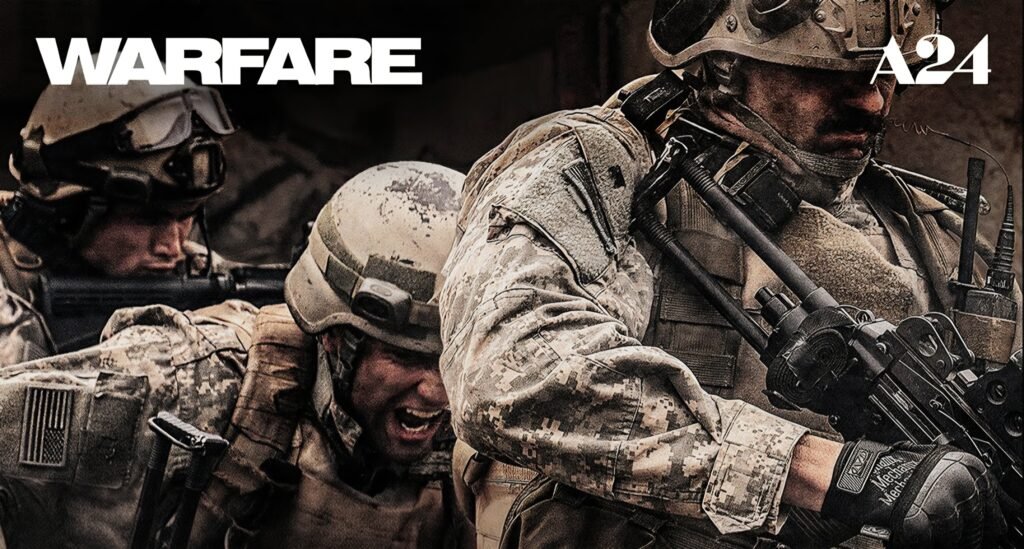
Warfare isn’t interested in being heroic and that’s exactly why it works. In a genre that often glorifies battle through slow-motion shots, emotional speeches, and triumphant endings, this film takes a completely different route. It removes the cinematic filters we’re used to and presents war in its most stripped-down, uncomfortable form. There’s no attempt to make it look beautiful. There’s no effort to make it feel inspiring. Instead, it places you directly inside the chaos and asks you to sit with it.
From the very beginning, the film establishes a sense of unease. The pacing doesn’t rush into action but builds tension gradually, allowing the environment and atmosphere to take over. You’re not watching a story unfold , you’re being placed inside a situation. The camera doesn’t always guide you; sometimes it simply observes, letting the unpredictability of war speak for itself. This approach makes the film feel less like a traditional narrative and more like an experience. What makes this even more effective is the absence of exaggerated heroism. The soldiers are not portrayed as invincible figures or larger-than-life characters. They are human — vulnerable, uncertain, and often overwhelmed. This grounded portrayal creates a connection that feels real. You don’t admire them from a distance; you feel alongside them.
Sound Design That Becomes the Film
If there’s one element that truly defines Warfare, it’s the sound design. This isn’t just a technical achievement , it’s the core of the storytelling. The film uses sound not as a background element, but as a primary tool to shape the entire experience. Every gunshot lands with impact. Every explosion carries weight. But what stands out even more are the moments in between the silence, the distant echoes, the sudden interruptions. These details create a constant sense of tension, making you hyper-aware of everything happening on screen. The sound doesn’t just tell you what’s happening; it makes you feel it physically.
There are moments where the absence of sound becomes more powerful than the chaos itself. A sudden drop into silence can feel heavier than a battlefield filled with noise. It’s in these moments that the film truly pulls you in, forcing you to sit with the uncertainty and fear that the characters are experiencing. The dialogue also plays a crucial role here. It’s not polished or overly dramatic. Conversations feel fragmented, rushed, and sometimes incomplete — just like they would in real life under extreme pressure. The aggression in tone, the hesitation in responses, and the urgency in communication all add to the realism. It feels less like scripted dialogue and more like overheard moments from an actual battlefield.
Immersion Over Spectacle
Unlike many modern war films that rely heavily on large-scale visuals and action sequences, Warfare focuses on immersion. The film doesn’t try to impress you with scale; it tries to trap you within its world. The camera work supports this approach, often staying close to the characters and limiting your perspective. You don’t get a clear overview of the battlefield , you see only what they see, hear only what they hear. This limited perspective creates a sense of confusion and disorientation that mirrors real combat situations. You’re never fully aware of what’s coming next. There’s no safety in predictability. Every movement feels risky, every decision carries weight. This unpredictability keeps the tension alive throughout the film.
The visual tone complements this perfectly. The color palette is muted, leaning into earthy tones and harsh lighting that reflect the environment. There’s nothing polished or stylized about the visuals. Everything feels raw, almost documentary-like, reinforcing the film’s commitment to realism.
Beyond its technical brilliance, Warfare succeeds because of its emotional
 The Emotional Weight of War
Honesty. It doesn’t try to manipulate the audience with forced sentiment. Instead, it allows emotions to emerge naturally from the situations the characters face.
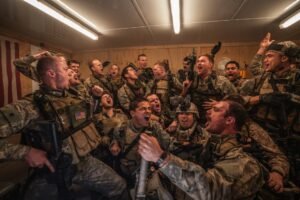
The film pays close attention to the psychological impact of war. Fear is constant, but it manifests in different ways , silence, aggression, hesitation, or even numbness. The soldiers are not just fighting an external enemy; they are also dealing with internal struggles. The pressure of leadership, the guilt of survival, and the helplessness of certain situations are all explored with subtlety. There’s a strong sense of vulnerability throughout the film. Injured soldiers are not portrayed as symbols of sacrifice but as individuals experiencing pain and fear. Leaders are not confident decision-makers at all times; they are burdened by the responsibility of choices that can change lives in seconds. This human approach makes the film resonate on a deeper level.
A Climax That Refuses Comfort
The climax of Warfare is where the film fully commits to its identity. It doesn’t build toward a grand, satisfying payoff. Instead, it delivers something far more unsettling honesty. There are no dramatic victories, no heroic last stands, no moments designed to make the audience cheer. What you get instead is a conclusion that feels real, almost uncomfortable in its simplicity. The film refuses to give closure in the way most war films do. It doesn’t try to justify what happened or wrap it in meaning. This raw approach is what makes the ending so powerful. It stays true to the film’s core idea — that war is not clean, not heroic, and not something that can be easily understood. It leaves you with a feeling rather than a message, and that feeling lingers long after the film ends.
Why Warfare Stays With You
What makes Warfare stand out isn’t just its realism or technical brilliance , it’s the way it refuses to compromise. It doesn’t try to entertain in the traditional sense. It doesn’t soften its edges to appeal to a wider audience. Instead, it fully commits to presenting war as it is: chaotic, exhausting, and deeply human. This is not a film you casually watch and move on from. It’s an experience that demands your attention and stays with you afterward. Not because of shocking moments or dramatic twists, but because of how real it feels.
In a time where many films prioritize spectacle over substance, Warfare takes the opposite approach. It strips everything down and focuses on what truly matters is the experience, the emotion, and the truth behind it all.
Watch the trailer of ‘Warfare’