Interstellar Review & Analysis: Why Nolan’s Sci-Fi Epic Still Feels Ahead of Its Time
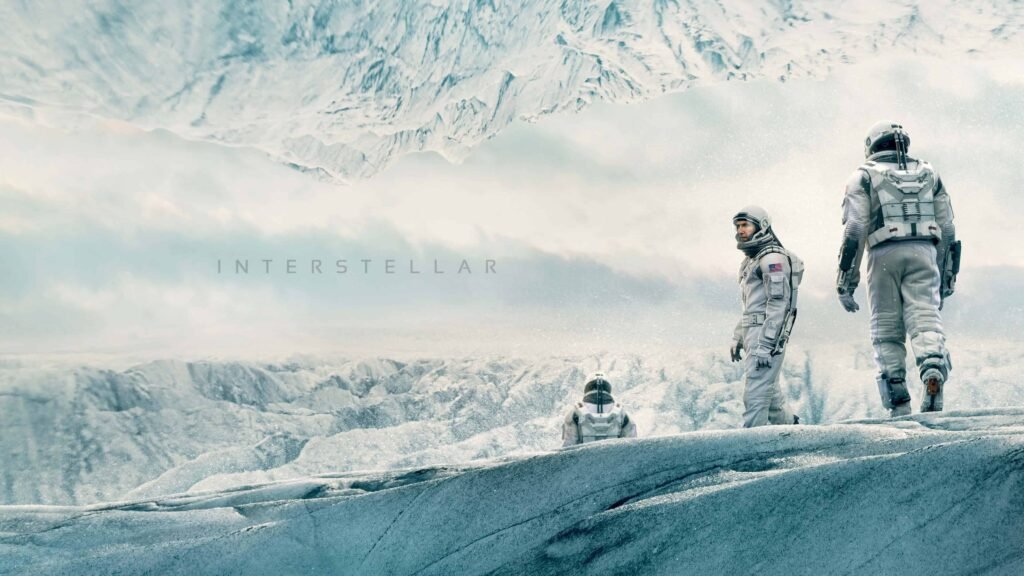
More than ten years after its release, Interstellar (2014) continues to stand as one of the most ambitious science-fiction films ever made. Directed by Christopher Nolan, the film blends real scientific theories, emotional storytelling, and breathtaking visuals into a cinematic experience that still feels extraordinary today.
While many modern sci-fi films rely primarily on spectacle, Interstellar dares to explore deeper ideas about humanity’s survival, the mysteries of the universe, and the emotional cost of exploring the unknown. By combining astrophysics with an intimate human story about love, sacrifice, and time, Nolan created a film that continues to fascinate audiences years after its release. Even today, discussions about Interstellar remain active among movie lovers, scientists, and filmmakers. Few films manage to balance epic scale with emotional storytelling the way Nolan’s space epic does.
A Story About Humanity’s Future
The premise of Interstellar revolves around a near future where Earth is slowly becoming uninhabitable. Environmental collapse, dust storms, and crop failures threaten the survival of humanity. Civilization is gradually losing hope. At the center of the story is Joseph Cooper, played by Matthew McConaughey, a former NASA pilot now working as a farmer. When Cooper discovers a hidden NASA project searching for habitable planets beyond our solar system, he is recruited for a dangerous mission. Together with scientist Amelia Brand (Anne Hathaway) and a team of astronauts, Cooper travels through a mysterious wormhole near Saturn to explore distant planets that might support human life.
However, the true emotional core of the film lies in Cooper’s relationship with his daughter Murph. Their bond drives the narrative forward and gives the story its emotional depth. As Cooper journeys farther into space, time begins to behave differently, creating heartbreaking consequences for those left behind on Earth. Through this father-daughter relationship, Nolan grounds a massive cosmic narrative in something deeply personal.
Science That Feels Real
One of the most remarkable aspects of Interstellar is its commitment to scientific authenticity. Nolan collaborated with renowned theoretical physicist Kip Thorne to ensure that the film’s depiction of wormholes, black holes, and time dilation was grounded in real scientific theory. The most famous example is the film’s depiction of the black hole Gargantua. Rather than relying on purely fictional visuals, the filmmakers used advanced simulations based on real equations describing gravitational lensing around black holes. Another powerful concept is time dilation on Miller’s Planet. Because the planet orbits extremely close to Gargantua, time moves drastically slower there — one hour on the planet equals seven years on Earth. This idea leads to one of the film’s most emotional moments when Cooper returns to the spacecraft and watches decades of video messages from his children.
Moments like this demonstrate how Interstellar uses scientific concepts not just for spectacle but to deepen the emotional impact of the story.
Nolan’s IMAX Vision
Christopher Nolan has always pushed the boundaries of filmmaking technology, and Interstellar is one of his most visually ambitious works. Large portions of the film were shot using IMAX cameras, allowing audiences to experience the vastness of space on an enormous scale. From the spinning spacecraft docking sequence to the towering waves on Miller’s Planet, the film delivers unforgettable visuals that remain stunning even today. Nolan also relied heavily on practical effects and large-scale models rather than purely digital imagery. This approach gives the film a tangible realism that many CGI-heavy blockbusters lack. Complementing these visuals is Hans Zimmer’s powerful score, built around massive organ tones that create a sense of cosmic wonder. The music elevates the film beyond traditional science fiction, giving it an almost spiritual dimension.
A Film About Time, Love, and Legacy
Beyond its scientific ideas and visual spectacle, Interstellar ultimately explores deeper philosophical questions. What defines humanity’s place in the universe? How far should we go to ensure the survival of future generations? One of Nolan’s boldest ideas is the suggestion that love itself might transcend time and space. This concept becomes central to the story as Murph continues searching for a way to solve the gravitational equation that could save humanity. The mysterious tesseract sequence inside the black hole remains one of the most debated moments in modern science-fiction cinema. Whether interpreted as theoretical physics or symbolic storytelling, the scene reinforces the film’s central idea: humanity’s future depends on both scientific discovery and emotional connection.
My Review: The Greatest Sci-Fi Film Ever Made
For me, Interstellar is not just another science-fiction movie — it is the greatest sci-fi film ever made in human history. Every time I revisit it, I’m amazed by the scale of Nolan’s vision and the emotional depth behind the spectacle. The film’s use of real science was what first made me fall in love with it. Instead of treating space as fantasy, Interstellar presents astrophysics as something awe-inspiring and real. Concepts like wormholes and black holes are not just visual effects; they feel like genuine scientific possibilities. Watching the film actually made me more curious about space science and astrophysics. Visually, the film remains unforgettable. The imagery of Saturn’s orbit, the terrifying waves of Miller’s Planet, and the mysterious tesseract are some of the most breathtaking sequences ever created in science-fiction cinema. But what truly makes Interstellar special is its emotional core. The relationship between Cooper and Murph transforms the film from a simple space adventure into a deeply human story. Their bond reminds us that exploration and discovery ultimately come from love and hope for the future. Even today, I still wish Hollywood would create another gigantic space spectacle like Interstellar. Many science-fiction films have tried, but very few capture the same balance of science, emotion, and cinematic scale. For me, Interstellar represents the highest potential of science-fiction cinema — bold, intelligent, visually stunning, and emotionally unforgettable.