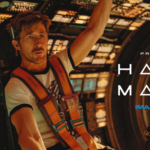

Project Hail Mary Is Dominating 2026. Here’s Why Everyone Is Obsessed
In a year packed with sequels, franchises, and big-budget spectacles, one film has unexpectedly taken over conversations across the internet — Project Hail Mary. Starring Ryan Gosling and directed by Phil Lord and Christopher Miller, the film has quickly become one of the most talked-about releases of 2026, not just because of its scale, but because of how it connects emotionally with audiences. What makes this even more interesting is that the film released in March, a period that usually doesn’t see massive box office dominance. Yet, despite that, it has opened to strong numbers and is already leading the charts, proving that audiences are still hungry for original, intelligent science fiction.
At its core, Project Hail Mary is a survival story, but not in the traditional sense. It follows a man who wakes up alone on a spaceship, far away from Earth, with no memory of how he got there. As the story unfolds, he slowly pieces together his mission — to save humanity from an extinction-level threat. This setup might sound familiar on paper, but the film elevates it with its execution, blending hard science with emotional storytelling in a way that feels both accessible and deeply immersive. The narrative doesn’t just rely on spectacle; instead, it builds tension through isolation, curiosity, and discovery.
What really makes the film stand out is how it approaches science fiction. Unlike many modern blockbusters that prioritize action over substance, Project Hail Mary leans heavily into scientific problem-solving. The film respects its audience’s intelligence, allowing viewers to engage with complex ideas without oversimplifying them. At the same time, it balances this with humor and warmth, creating a tone that feels refreshing in a genre often dominated by seriousness and darkness. This balance is one of the key reasons why the film is trending across platforms, with audiences praising it as both entertaining and thought-provoking.
Ryan Gosling’s performance plays a huge role in grounding the film. Carrying a story that is largely centered around isolation is no easy task, but he manages to bring vulnerability and relatability to the character. His portrayal captures the fear, confusion, and determination of someone placed in an unimaginable situation. As the film progresses, the emotional layers of the character begin to unfold, making the audience invest not just in the mission, but in the person behind it. This human connection is what elevates the film beyond just another space adventure.
 A New Era for Sci-Fi Cinema
The success of Project Hail Mary also signals something bigger — a shift in what audiences expect from science fiction. Over the past decade, the genre has often been dominated by franchises and cinematic universes, where storytelling sometimes takes a backseat to spectacle. However, films like this prove that there is still a strong demand for original stories that prioritize narrative depth and emotional resonance.
This trend isn’t entirely new. Films like Interstellar and The Martian showed that audiences are willing to engage with complex, science-driven narratives if they are presented in an accessible way. Project Hail Mary builds on that legacy but adds its own identity, combining the emotional depth of Interstellar with the humor and problem-solving elements of The Martian. The result is a film that feels both familiar and fresh at the same time.
Another major factor contributing to its popularity is the way it handles scale. While the story is set in the vastness of space, it never loses sight of its emotional core. The film constantly reminds viewers of what is at stake — not just the survival of humanity, but the personal journey of the protagonist. This dual focus creates a narrative that feels both epic and intimate, a balance that very few films manage to achieve successfully.
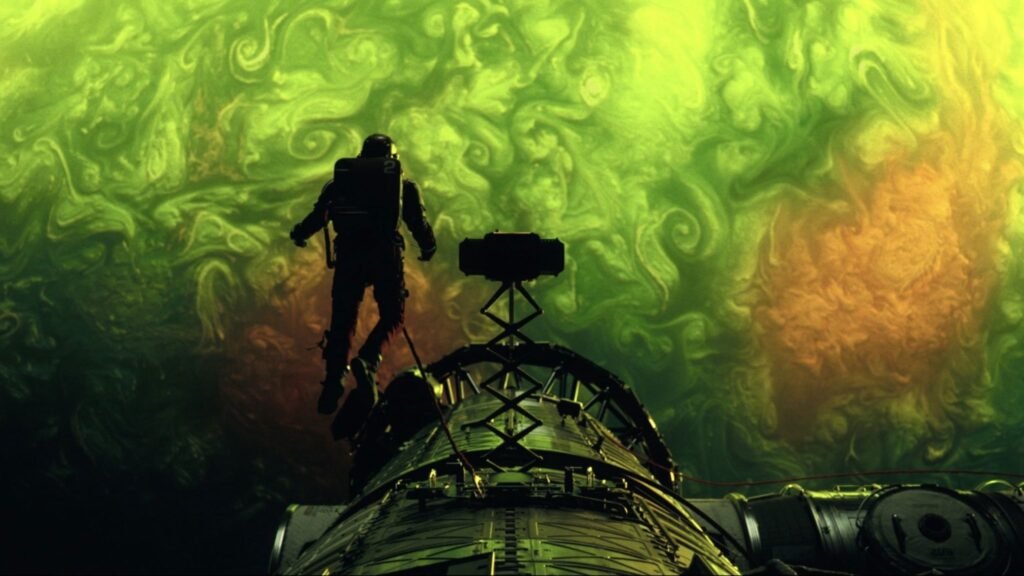
The film’s visuals and sound design further enhance this experience. Space is depicted not just as a backdrop, but as a character in itself — vast, silent, and unforgiving. The cinematography captures this isolation beautifully, using wide shots and minimalistic compositions to emphasize the scale of the universe. Meanwhile, the sound design plays a crucial role in immersing the audience, using silence and subtle audio cues to build tension and atmosphere.
What’s also interesting is how the film has sparked renewed interest in science fiction as a genre. Conversations around the film aren’t just limited to its story or performances; they extend to discussions about space exploration, scientific possibilities, and the future of humanity. This kind of engagement is rare and highlights the impact that well-crafted cinema can have beyond entertainment.
Why This Film Is Blowing Up Right Now
The timing of Project Hail Mary’s release has worked perfectly in its favor. With audiences increasingly looking for fresh content, the film arrives as a breath of fresh air in a market saturated with sequels and reboots. Its strong opening numbers and positive word-of-mouth have created a momentum that continues to grow with each passing day.
Social media has played a significant role in amplifying this hype. Clips, discussions, and reviews are constantly circulating online, with viewers sharing their reactions and interpretations of the film. This organic buzz has helped the film reach a wider audience, turning it into a global talking point.
Another reason for its success is its accessibility. While the film deals with complex scientific concepts, it presents them in a way that is easy to understand, making it appealing to both hardcore sci-fi fans and general audiences. This broad appeal is crucial for a film’s success, especially in today’s competitive entertainment landscape.
At the same time, the film taps into a deeper emotional layer. Beyond the science and spectacle, it explores themes of loneliness, resilience, and hope. These universal themes resonate with audiences on a personal level, making the experience more impactful. It’s not just about watching a story unfold; it’s about feeling it